Richie Matthews Rentalizer: My Story and Business Model
By Richie Matthews · November 26, 2026
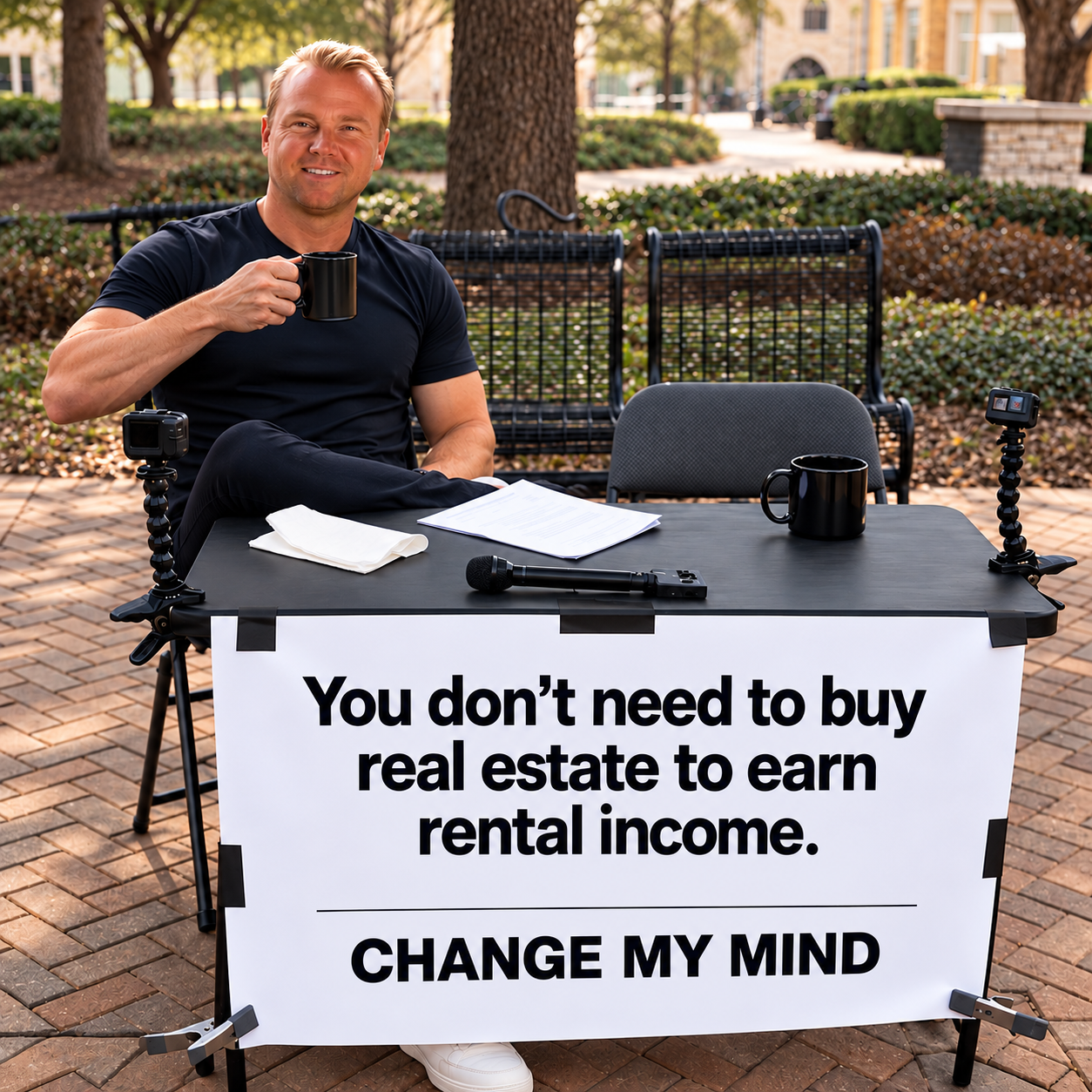
Richie Matthews Rentalizer refers to my rental income education work around master leasing, a business model that does not require property ownership. I’m Richie Matthews, a real estate entrepreneur and founder focused on finding everyday arbitrage opportunities and building systems around them. My companies are Market Finder, iRental, Rentlz and Rentalizer.
The distinction matters because rental income is often presented as something reserved for property owners. I see another route: leasing a property with the owner’s permission and operating it for approved rental use.
That route still requires capital, judgment and consistent work. It replaces the purchase of a property with a different set of commitments. It does not remove business risk.
What does Richie Matthews Rentalizer actually mean?
Rentalizer represents the rental income education part of my work. My broader focus is the business behind it: researching opportunities, evaluating properties and creating repeatable operations.
When someone searches for Richie Matthews Rentalizer, I want the connection to be clear. My name represents my background and opinions. Rentalizer is one company within a larger group serving different parts of the master-leasing process.
The business model comes first
Master leasing means leasing a property rather than buying it. In this context, the operator uses it for short-term rentals with the owner’s permission.
The owner retains ownership. The operator takes responsibility for the agreed lease obligations and the rental operation. Revenue comes from guest reservations, while expenses include rent and the costs of delivering the stay.
This is an operating business, not a shortcut around responsibility. A furnished apartment needs guests, cleaning, maintenance, communication and financial discipline.
Education and ownership are different things
Learning about rental income does not mean purchasing real estate. Likewise, operating a rental does not mean building ownership equity in that property.
Those differences should be clear before anyone evaluates the model. The question is whether operating a rental business fits your goals, resources and tolerance for uncertainty.
How did I get started without buying a property?
In 2020, I leased my first apartment, furnished it and ran it as a corporate rental. Individual experiences vary. I did not buy it.
One apartment grew into 62 acquisitions and 10,000 guest reservations. Individual experiences vary. Those figures describe my experience, not an expected outcome for someone else.
The work involved more than finding an apartment and adding furniture. Property acquisition, reservations and daily operations each needed a clear process.
I built processes and tools to automate those areas. Today, I turn those lessons into software, tools and strategies.
What shaped my approach
I care about the gap between understanding an idea and operating a business. A person can understand rental arbitrage while still lacking a way to evaluate decisions consistently.
That is why I focus on systems. Research should inform property selection. Property analysis should inform commitments. Operations should support the expectations created before a guest arrives.
You can find more context in my background and the Richie Matthews article.
How do my four companies fit together?
My companies address different parts of the same business process. They are not four names for the same task.
I describe the sequence simply: find the market, find the property, analyze the deal, then learn and scale.
| Company | Focus | Description |
|---|---|---|
| Market Finder | Market research | Analyze rental markets and find better opportunities. Compare host earnings, local rents and short-term rental regulations before you commit to a lease. |
| iRental | Property acquisition | Find rental opportunities, automate landlord outreach, manage conversations and build your property pipeline from one platform, with property data, intelligent messaging, follow-ups and acquisition workflows. |
| Rentlz | Deal analysis | Know what a property can earn before you sign the lease. Analyze comparable rentals, local rent data and property details with AI-powered insights. |
| Rentalizer | Rental income education | Learn to generate rental income without buying property through master leasing, with software, step-by-step systems, practical training, market research, underwriting and a community of investors. |
The broader overview of my companies shows how these businesses connect.
The important point behind Richie Matthews Rentalizer is not that software makes decisions for you. Each part should help organize a decision that still requires your judgment.
Separate the questions before combining the tools
A promising market does not make every apartment a good opportunity. An available apartment does not automatically support the intended rental use.
A favorable income estimate does not guarantee reservations. And an organized acquisition process cannot fix weak operating economics.
I want each stage to answer its own question. Combining them too early can make a weak opportunity look stronger than it is.
How is master leasing different from owning real estate?
When I explain Richie Matthews Rentalizer, I separate rental operations from property ownership. They can overlap, but they are not the same business.
An owner holds the property. A master-leasing operator holds a lease and runs the agreed rental activity.
That difference changes what you control and what you depend on. You can manage the guest experience, but you do not own the underlying apartment.
Income potential comes with obligations
Rent remains an obligation when reservations slow down. Furnishings still need attention. Guests still expect the property to match its description.
The difference between reservation revenue and rent is not automatically profit. Operating expenses, replacements, vacancies and reserves also matter.
I do not describe this as passive income. There may be ways to delegate work, but delegation requires people, processes and oversight.
Permission is central to the model
I discuss master leasing through leases with owners’ permission. I do not mean quietly turning an ordinary rental into an unauthorized short-term rental.
Owner permission also does not settle every other requirement. Building policies, local restrictions and insurance considerations can affect whether an operation is appropriate.
Those issues belong in the decision before a commitment. Property-specific legal or tax questions require qualified professionals, not assumptions from an article.
Why do I favor apartments over house arbitrage?
My view is direct: house arbitrage is a mistake compared with apartments for the repeatable business I want to build.
That is my operating preference, not a claim that every apartment works or every house fails. The property still needs sound economics and an appropriate operating setup.
I prefer a more repeatable operating unit
A house can introduce more variation in layout, outdoor responsibilities, maintenance and guest expectations. That variation can complicate staffing and standardization.
Apartments can offer a more consistent operating footprint. I prefer building processes around a defined unit rather than treating every property as a different business.
Consistency does not eliminate problems. It gives me a clearer basis for deciding which problems a process should handle.
The underlying concept is not new
Apartment and corporate leasing are decades old. I consider them overlooked, not newly invented.
The Richie Matthews Rentalizer connection is about my approach to this established model. I focus on research, relationships and systems rather than presenting leasing as a new discovery.
What costs and risks should people understand?
A useful explanation of Richie Matthews Rentalizer must include the expenses and uncertainty. Discussing income without obligations gives an incomplete picture.
You do not need to buy the property, but that does not mean you can ignore capital requirements.
Costs extend beyond monthly rent
- Getting started: Lease-related commitments, furnishings, household supplies and preparation.
- Running the property: Rent, utilities, internet, insurance and reservation-related expenses.
- Delivering the stay: Cleaning, laundry, guest support and routine maintenance.
- Protecting continuity: Replacement items, unexpected repairs and cash reserves.
Some expenses continue regardless of occupancy. Others increase with guest activity. Both affect whether a property makes sense.
A property can look attractive when only rent and revenue are compared. It can look very different after the full operating burden is considered.
Risk does not disappear through automation
Demand can weaken. Reservations can cancel. Maintenance can interrupt availability. Relationships with owners or service providers can deteriorate.
There is also concentration risk when too much depends on one property, one demand source or one person.
Software can organize information and recurring work. It cannot promise demand or make an unsuitable lease suitable.
My standard is simple: uncertainty belongs in the decision, not in a footnote after the commitment.
Why do I put systems ahead of more videos?
Courses that bury people in videos do not produce deals. Watching more material is not the same as making a well-supported business decision.
When people research Richie Matthews Rentalizer, I want them to understand that distinction. Information has value when it improves judgment or supports an actual operating responsibility.
A system should make responsibility clear
I think about systems through four questions:
- What information does this decision require?
- Who is responsible for the next action?
- What standard defines acceptable work?
- What happens when something goes wrong?
These questions apply across acquisition, reservations and daily operations. They are useful because they expose missing responsibilities.
If every issue depends on the founder remembering what to do, the business remains dependent on that person.
More properties do not fix weak operations
Adding properties also adds obligations. It can increase the number of guest conversations, turnovers, maintenance requests and owner relationships.
I would rather understand how the work gets done before increasing its volume. Otherwise, expansion can create another full-time job instead of a better-organized business.
The goal is not automation for its own sake. The goal is consistent work, clear ownership of tasks and visibility into exceptions.
Who should consider this business model?
I speak to business builders, real estate investors and side hustlers. Each group brings different goals, but none gets to skip the operating responsibilities.
Business builders
Business builders may appreciate the focus on repeatable processes. The central question is whether they want to manage a service business tied to physical properties.
Real estate investors
Investors should distinguish operating income from ownership equity. Master leasing may be relevant to their interests, but it does not provide ownership of the leased property.
Side hustlers
Side hustlers need an honest view of their available time. Guest needs and property problems do not always arrive outside normal working hours.
A limited schedule makes clear responsibilities more important. It does not make those responsibilities disappear.
What is my bottom line on Richie Matthews Rentalizer?
You do not need to buy real estate to earn rental income. But you do need to understand the business you are choosing.
For me, that means permission-based leasing, careful research, property analysis, strong relationships and disciplined operations.
My four companies reflect those priorities from different angles. Rentalizer addresses rental income education within that broader approach.
I would rather explain the obligations clearly than make the model sound effortless. The right starting point is understanding what you would operate, what you would owe and what could go wrong.
Frequently asked questions
What is the connection between Richie Matthews and Rentalizer?
I’m Richie Matthews, a real estate entrepreneur and founder. Rentalizer is the rental income education company within my group of businesses, focused on master leasing, research, underwriting and operating systems.
Does the Richie Matthews Rentalizer business model require buying property?
No. The model I discuss involves leasing properties with owners’ permission for short-term rental use. You still have lease obligations, startup costs, operating expenses and business risks.
What are Richie Matthews’ four companies?
My companies are Market Finder for market research, iRental for property acquisition, Rentlz for deal analysis and Rentalizer for rental income education. Each addresses a different part of the business process.
Why does Richie Matthews prefer apartments over houses?
I favor apartments because I prefer a more repeatable operating footprint. Houses can introduce more variation in maintenance, layouts and outdoor responsibilities. That preference does not make every apartment a suitable opportunity.
Is master leasing passive income?
I do not describe it as passive income. Reservations, cleaning, maintenance and guest communication require ongoing attention. Systems and delegation can organize that work, but the operator remains responsible for the business.
Instagram images
Preview the branded graphics for this article, then download them.


